AI in Game Music Composition: What Does the Future Hold?
Music has always been an integral part of video games, shaping player experiences and amplifying emotional resonance. From the iconic chiptunes of the 1980s to today’s sprawling orchestral scores, the evolution of game music has been a journey of innovation and artistry. Recently, artificial intelligence (AI) has entered the realm of music composition, sparking debates about its potential to revolutionize the way game soundtracks are created. In this article, we explore the role of AI in game music composition and what the future might hold.
How AI Composes Music
AI music composition involves the use of machine learning algorithms to create original music. These systems are trained on vast datasets of musical pieces, learning the structures, patterns, and styles that define different genres. By analyzing this data, AI can generate melodies, harmonies, and rhythms that mimic or innovate upon human compositions.
For example, platforms like OpenAI’s MuseNet and AIVA (Artificial Intelligence Virtual Artist) have demonstrated the ability to produce music in diverse styles, from classical symphonies to jazz improvisations. These tools are becoming increasingly accessible, making it easier for game developers to experiment with AI-generated music.
AI’s Role in Game Music Today
While AI isn’t replacing human composers yet, it’s already playing a significant role in game music production. Here’s how:
- Dynamic Soundtracks: AI excels in creating adaptive music that responds to gameplay in real-time. For instance, as a player moves through different environments or engages in combat, AI-generated music can seamlessly shift to match the mood and intensity.
- Cost-Effective Solutions: For indie developers with limited budgets, AI provides an affordable alternative to hiring a full-time composer. Tools like AIVA allow developers to generate high-quality music that fits their game’s aesthetic.
- Experimentation and Prototyping: Human composers can use AI to prototype ideas, exploring new musical directions quickly. This collaboration between AI and humans can lead to innovative compositions that wouldn’t have been possible otherwise.
Benefits of AI in Game Music Composition
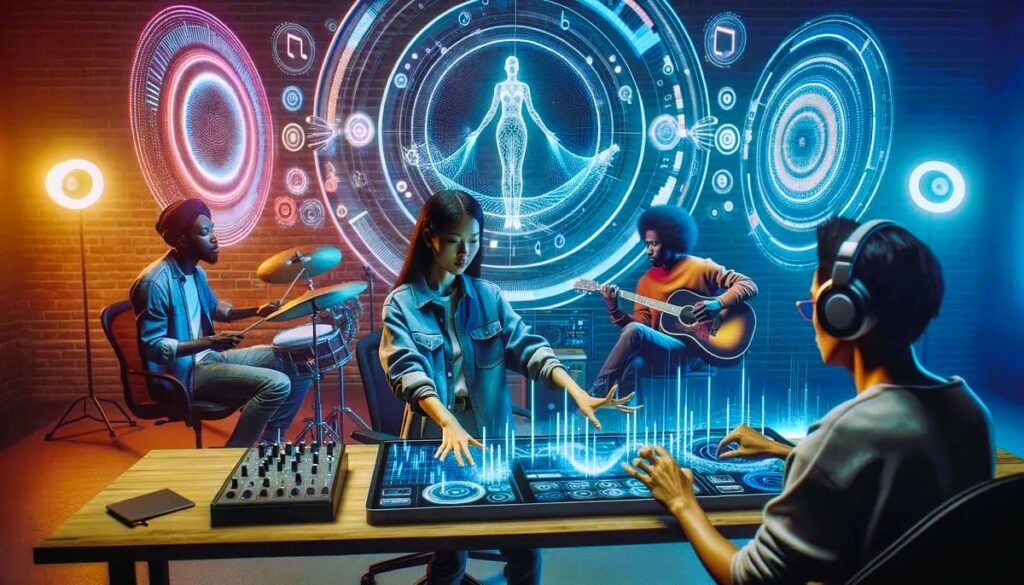
The integration of AI in music composition offers several advantages:
- Scalability: AI can produce large volumes of music in a short time, making it ideal for open-world games that require extensive soundtracks.
- Customization: Developers can tweak AI-generated music to align with their vision, creating unique and personalized soundtracks.
- Accessibility: AI democratizes music composition, enabling smaller studios and solo developers to incorporate professional-grade music into their games.
For example, AI was used to create procedural music in No Man’s Sky, a game known for its vast, ever-changing universe. The AI-generated soundtrack adapts to the player’s exploration, ensuring a cohesive yet dynamic audio experience.
Challenges and Limitations
Despite its potential, AI in music composition isn’t without challenges:
- Lack of Emotion: While AI can mimic styles and patterns, it often struggles to capture the emotional depth and nuance that human composers bring to their work.
- Over-Reliance on Datasets: AI models are only as good as the data they’re trained on. Biases in the dataset can lead to repetitive or uninspired music.
- Ethical Concerns: The use of AI-generated music raises questions about copyright and the value of human creativity. If AI is trained on copyrighted works, does the resulting music infringe on intellectual property rights?
Like this article? Don’t miss the article about Top RPG Soundtracks.
The Future of AI in Game Music
As AI technology advances, its role in game music composition is likely to expand. Here are some potential developments:
- Fully Interactive Soundtracks: AI could create music that not only reacts to gameplay but also evolves based on a player’s individual style and preferences.
- Collaborative Tools: AI may become a more intuitive partner for composers, offering suggestions, generating ideas, and even automating parts of the composition process.
- Enhanced Procedural Worlds: For games with procedural generation, AI could compose unique soundtracks for every playthrough, ensuring that no two experiences sound the same.
One example of a potential future application is in augmented and virtual reality games, where AI could generate immersive soundscapes tailored to a player’s environment and actions in real-time.
AI is poised to transform game music composition, offering new possibilities for creativity, efficiency, and interactivity. While it may not replace human composers, it can complement their work, leading to richer and more dynamic gaming experiences. As developers and musicians continue to experiment with this technology, the future of AI in game music looks both exciting and promising.
For a deeper dive into the relationship between AI and music, check out Fandom’s article on AI in gaming.